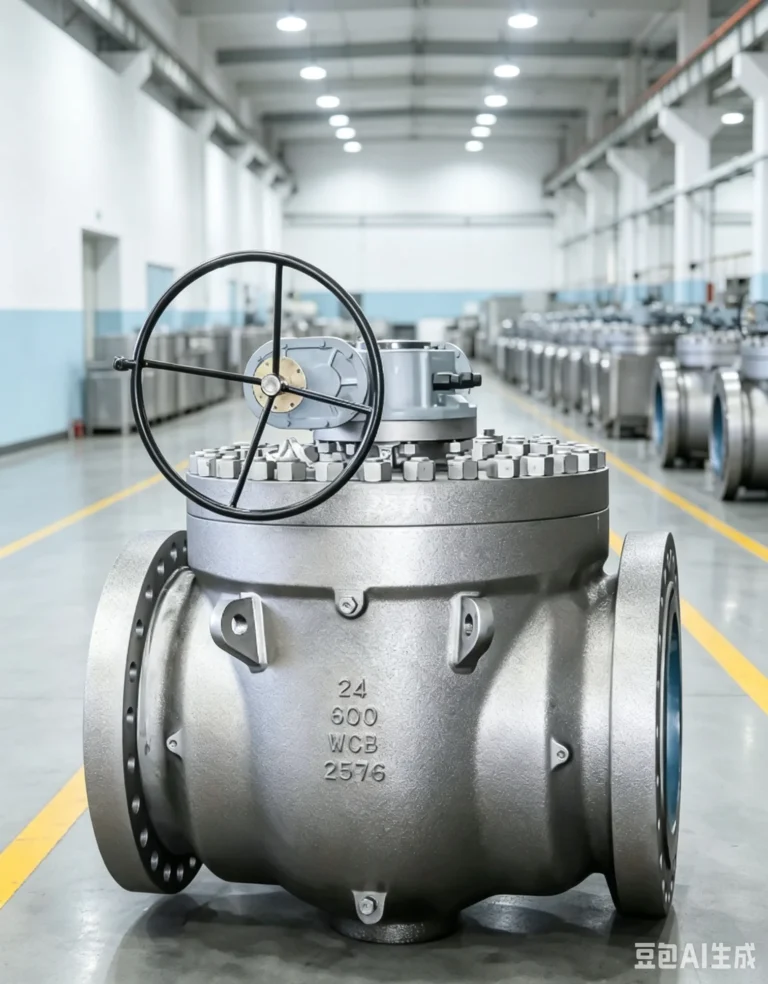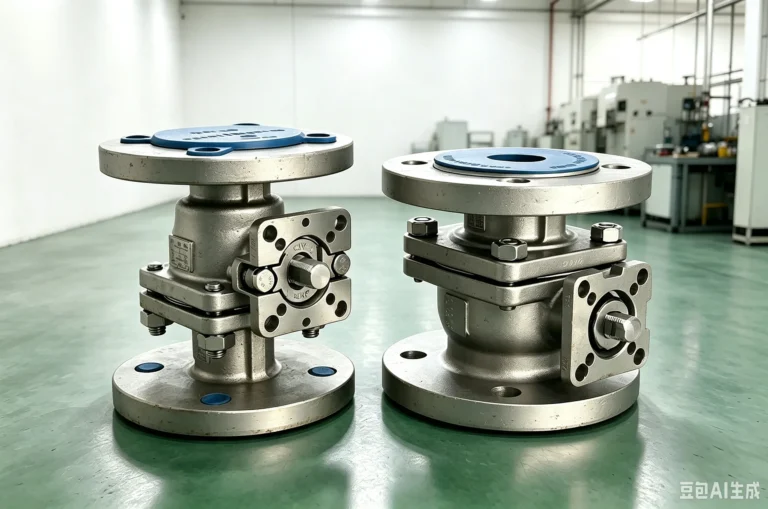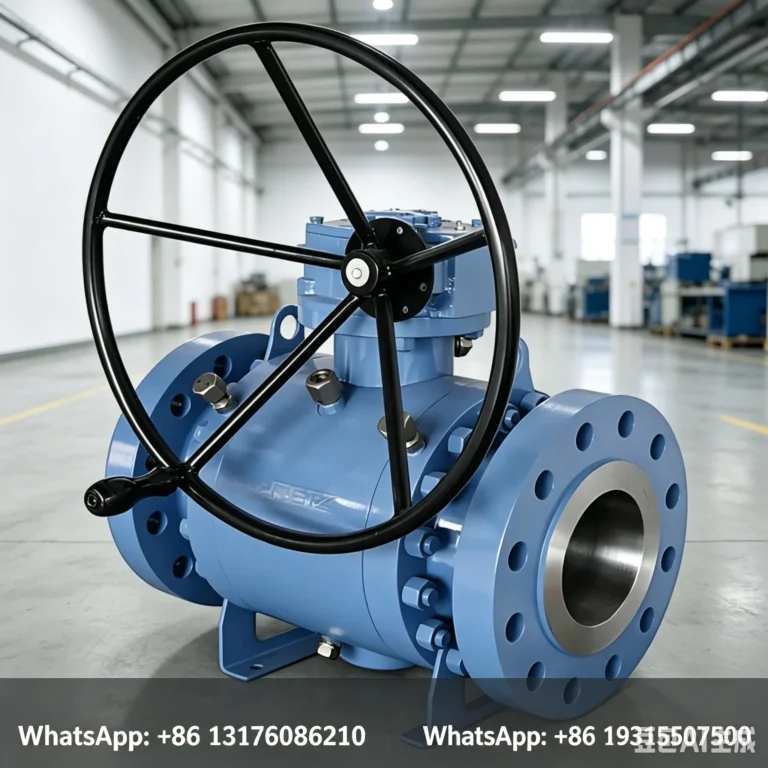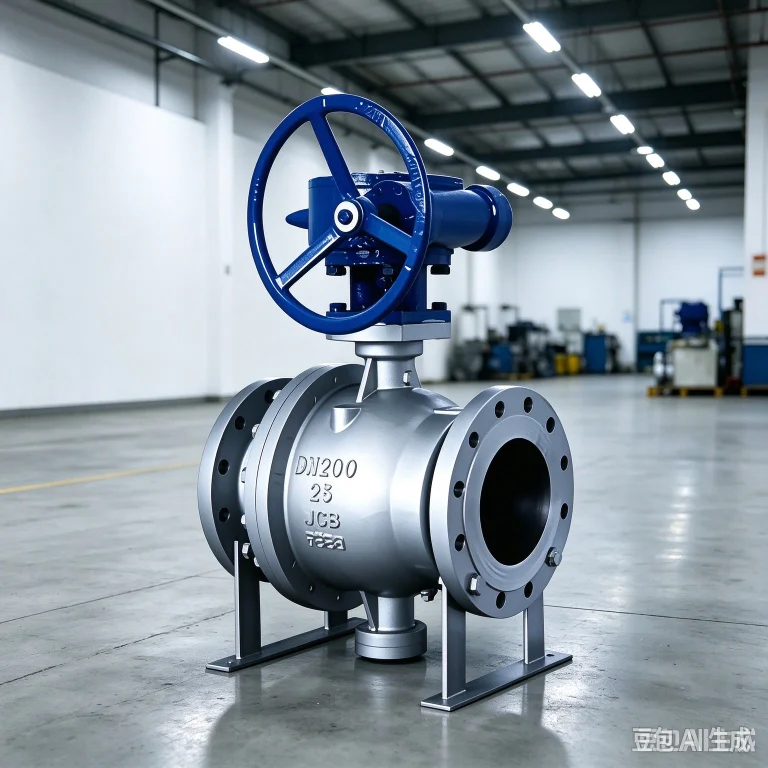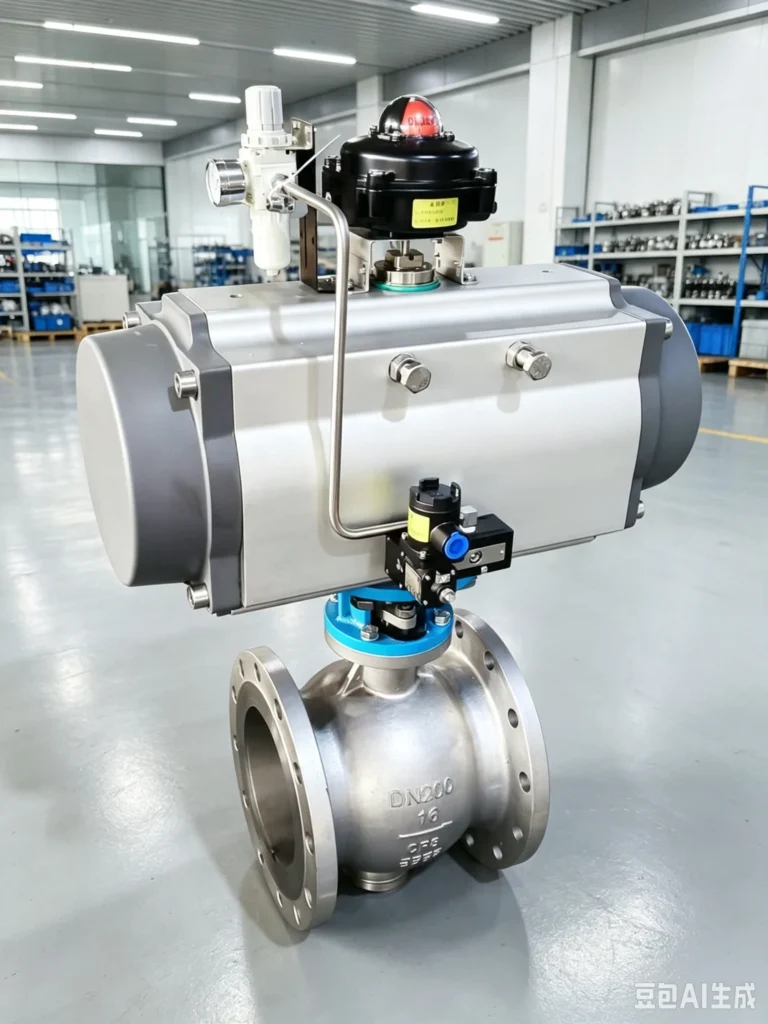
Trunnion-Mounted Orbit Ball Valve
PRODUCT PARAMETERS
Description
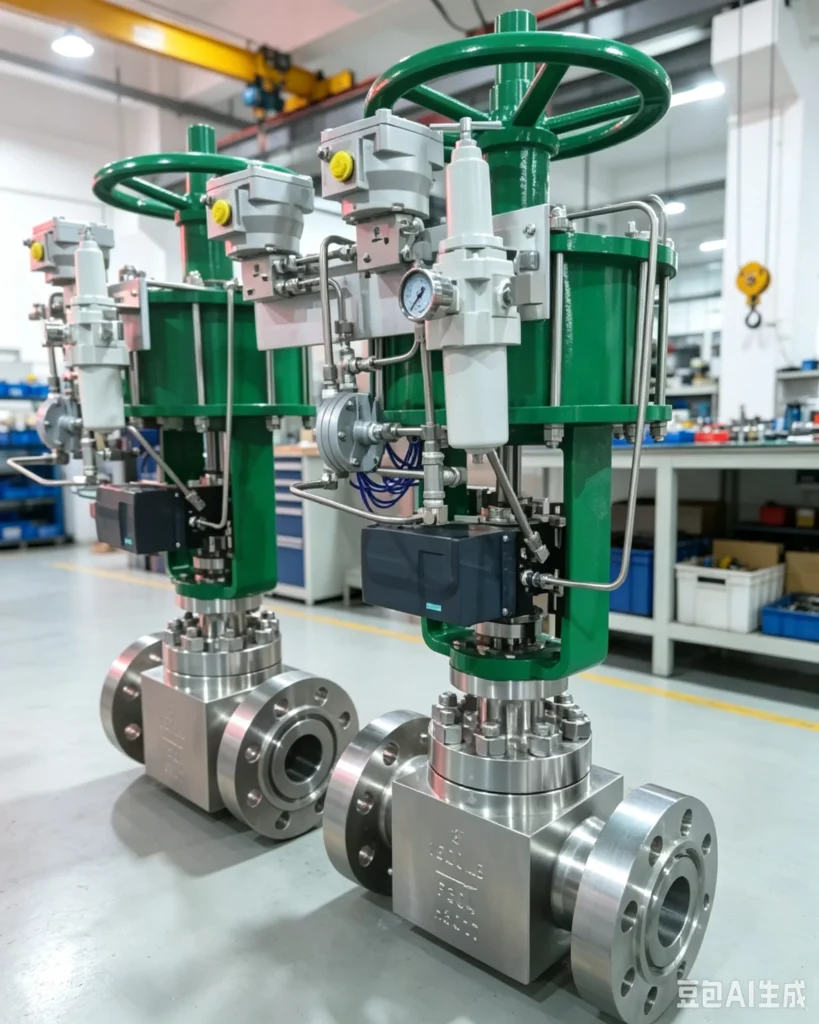
Trunnion-Mounted Orbit Ball Valve (Frictionless, Forced-Sealing Ball Valve)
I. Product Overview
The Orbit ball valve—also known as a frictionless, forced-sealing ball valve or a rising-stem orbit ball valve—is a high-performance shut-off valve designed for demanding applications involving high temperatures, high pressures, frequent cycling, and critical shut-off requirements. Unlike standard floating or trunnion-mounted ball valves, it utilizes a unique cam-track mechanism that combines lifting and rotating actions, ensuring zero friction and zero wear on the sealing surfaces throughout the entire opening and closing process. Driven by precise mechanical transmission via the stem’s track groove, the valve lifts to disengage from the seat, rotates to switch positions, and finally lowers to wedge tightly against the seat. This effectively eliminates common issues found in traditional valves, such as sealing surface wear, sticking, internal leakage, and short service life.
This valve features a top-entry integral structure, a single-seat design, and automatic pressure relief capabilities. It allows for in-line maintenance without removing the valve from the pipeline. Key advantages include zero leakage, resistance to erosion, high-temperature and high-pressure tolerance, and long maintenance-free intervals. It is widely used in petrochemical, natural gas, power plant, hydro-processing, high-temperature steam, and hazardous (flammable/explosive) process pipelines, serving as a specialized valve for critical process shut-off applications.
II. Working Principle (Core Orbit Action)
The Orbit ball valve operates on a principle of sequential lifting and rotating actions, ensuring no sliding friction on the sealing surfaces throughout the process:
- Opening process: Guided by the stem track pin, the ball first rises vertically to disengage from the seat, completely separating the sealing surfaces; subsequently, the ball rotates 90° without friction to the fully open position.
- Closing process: The ball first rotates without friction to the closed position; then, driven by the cam track mechanism, it is forced downward to wedge tightly against the seat, achieving a rigid, zero-leakage seal.
The entire operation involves rotation without friction and sealing via compression, fundamentally eliminating issues such as sealing surface wear, scratching, aging, and internal leakage.
III. Structural Features
- Frictionless operation throughout: During opening and closing, the sealing surfaces completely disengage, eliminating sliding friction. This prevents wear, sticking, and scratching, making the valve suitable for high-frequency cycling applications involving tens of thousands of cycles. 1. Mechanically forced wedge sealing: Mechanical force ensures tight sealing regardless of medium pressure or differential pressure, achieving zero-leakage shut-off under both high- and low-pressure conditions.
- Single-seat automatic pressure relief: Automatically relieves abnormal pressure build-up in the body cavity, eliminating over-pressurization risks and safety hazards—outperforming standard dual-seat ball valves.
- Top-entry in-line maintenance: Internal components can be replaced and maintenance performed without removing the valve from the pipeline, significantly reducing downtime losses.
- Ultra-low operating torque: Friction-free rotation after the ball disengages from the seat ensures effortless operation; compatible with smaller actuators, reducing automation setup costs.
- Self-cleaning/flushing capability: The gap created when the ball disengages from the seat forms a high-speed flow channel, allowing the medium to automatically flush the sealing surfaces and prevent scaling or debris accumulation.
- Fire-safe and anti-static design: Complies with API 607 fire-safety standards, maintaining a seal during fire events; features an integrated anti-static structure to eliminate the risk of static electricity accumulation.
- High-strength integral forged/cast valve body: Dense structural integrity, resistance to high-pressure shock and deformation, and suitability for severe high-temperature and high-pressure service conditions. IV. Common Material Specifications
- Valve Body: WCB, WC6, WC9, A105, F304, F316L, F22 (forged steel)
- Ball/Seat: Stainless steel base with Stellite alloy overlay (erosion, high-temperature, and wear-resistant)
- Stem: 2Cr13, 304, 316L high-strength stainless steel
- Sealing Pair: Metal-to-metal hard seal; metal plus flexible composite seal
- Packing: Flexible graphite, high-temperature composite packing (high-temperature resistant, zero external leakage)
V. Technical Parameters
- Nominal Diameter: DN25–DN400
- Pressure Rating: PN16–PN160; Class 150–Class 900
- Applicable Temperature: -40°C–550°C
- Connection Type: Flanged, butt-weld, socket-weld
- Actuation: Manual, worm gear, pneumatic, electric, hydraulic
- Leakage Class: Class VI (zero leakage)
- Structural Design: Top-entry, single-seat, track-guided forced sealing
- Explosion-proof Rating: Ex d IIC T6 (optional for automated models)
VI. Applicable Operating Conditions
✅ Applicable Scenarios
- Oil & gas, long-distance pipelines, gathering stations: High-frequency switching, high-pressure shut-off
- Petrochemical, hydrogenation, coal chemical industries: High-temperature/high-pressure shut-off for flammable/explosive media
- Power plants, thermal power stations: High-temperature steam, superheated steam, high-pressure water/steam systems
- Critical process pipelines requiring frequent cycling, long-term zero leakage, and maintenance-free operation
- Media containing trace particles, prone to scaling or slag accumulation; conditions where standard ball valves suffer wear or internal leakage
- Continuous production systems requiring online maintenance (where shutdown for pipe disassembly/repair is not permitted)
❌ Inapplicable Conditions
- Highly corrosive acidic or alkaline media (requires switching to fluoropolymer-lined valves)
Applications involving high-velocity flow with large, hard abrasive particles
Long-term throttling at low opening angles (track ball valves are designed for shut-off service; throttling use is not recommended)
VII. Applicable Standards
Design and manufacturing: GB/T12224, GB/T12237, API 6D
Fire safety standards: API 607, JB/T6899
Flange and welding standards: ASME B16.5, HG20592
Pressure testing: GB/T13927, API 598
VIII. Installation and Operating Instructions - Thoroughly purge the pipeline before installation to remove welding slag and impurities, preventing hard particles from entering the valve and damaging the track and sealing surfaces.
- There are no strict flow direction limitations; the valve can be installed at any angle. Ensure proper flange alignment and avoid imposing forced stress during installation.
- Do not use for long-term throttling at low opening angles; use only for full-open/full-close shut-off applications to prevent localized erosion damage to the seal.
- Calibrate the full stroke during the commissioning of automated models; avoid over-travel impacts to protect the track drive mechanism.
- For high-temperature applications, perform slow warm-up of the pipeline to avoid structural stress damage caused by thermal shock.
- Supports in-line maintenance and repair without removing the valve body from the pipeline, effectively minimizing equipment downtime.
- Regularly inspect the packing seal and valve position/stroke; for high-frequency operation, perform a full-stroke opening/closing maintenance cycle quarterly.
IX. Summary of Product Advantages
With four core advantages—frictionless opening/closing, mechanical forced sealing, single-seat pressure relief, and top-entry in-line maintenance—track ball valves effectively resolve the common pain points associated with standard ball valves, such as susceptibility to wear and internal leakage, unsuitability for high-frequency operation, and complex maintenance requirements. Featuring high-temperature and high-pressure resistance, zero leakage, and an exceptionally long service life, this is the high-performance valve of choice for high-frequency shut-off and safety isolation in high-end, high-risk process pipelines across sectors such as petrochemicals, power generation, and natural gas.
FAQs
What types of products can we offer?
Make amazing 60 degree bevel cuts with our 8-1/4 in. SKILSAW Worm Drive model SPT78W-01. This saw is powered by our largest 15 amp Dual-Field high torque motor so you will make the last cut as precisely as you did the first cut. Exclusive 60 degree bevel. High torque Dual-Field motor. Legendary SKILSAW durability. Includes: SPT78W 8-1/4 In. Worm Drive SKILSAW, 24 Tooth Carbide blade and multi-functional blade wrench.

What logistics do we ship through?
Make amazing 60 degree bevel cuts with our 8-1/4 in. SKILSAW Worm Drive model SPT78W-01. This saw is powered by our largest 15 amp Dual-Field high torque motor so you will make the last cut as precisely as you did the first cut. Exclusive 60 degree bevel.



Can it be customized as per our requirements?

Make amazing 60-degree bevel cuts with our 8-1/4 in. SKIL Worm Drive Skilsaw model SPT78W-01. This Skilsaw is powered by our largest 15 amp Dual-Field™ high torque motor so you will make the last cut as precisely as you did the first cut. Exclusive 60-degree bevel. High torque Dual-Field™motor. Legendary SKIL durability.
What is our ordering process?
Shenguan is a direct seller of CATL, LISHEN, EVE, GOTION, Narada, TAFEL, CALB, REPT and other batteries. We have fresh stock, ready for shipment. Support ODM&OEM, please contact the store customer service to provide customized requirements.
What services are included in the after-sales service?
- This saw is powered by our largest 15 amp Dual-Field
- High torque motor so you will make the last cut as precisely as you did the first cut.
- Exclusive 60 degree bevel. High torque Dual-Field motor. Legendary SKILSAW durability.
- Includes: SPT78W 8-1/4 In. Worm Drive SKILSAW, 24 Tooth Carbide blade and multi-functional blade wrench.